Dumpster Diving
A cooperative board game for 2-4 players where a team of raccoons race to scavenge loot from dumpsters before a trash company seals them off for good.
Overview
Dumpster Diving: A Cooperative Board Game
Dumpster Diving is a 2-4 player cooperative board game where a team of raccoons work together to scavenge loot from dumpsters before a trash company seals them all off. Games run about 20-30 minutes. The game components include:
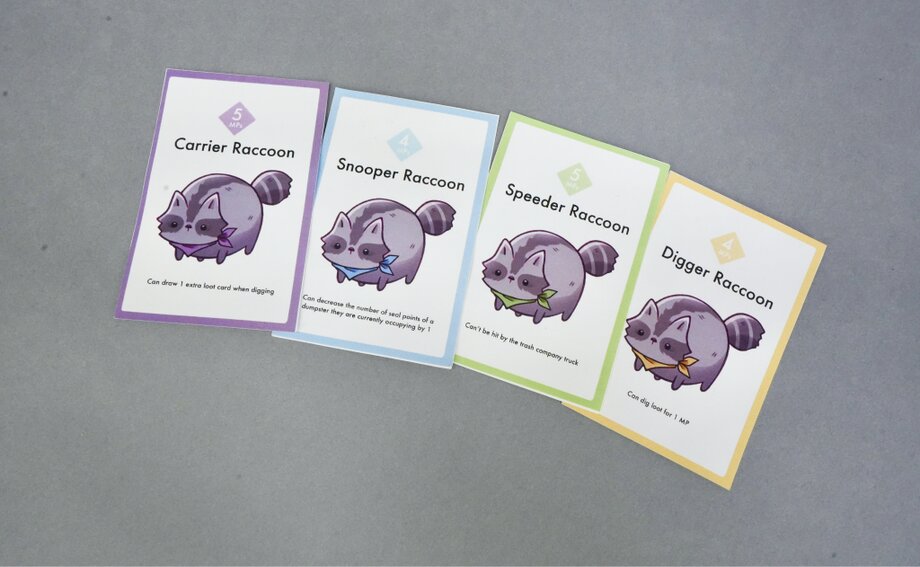
- 1 Raccoon character cards
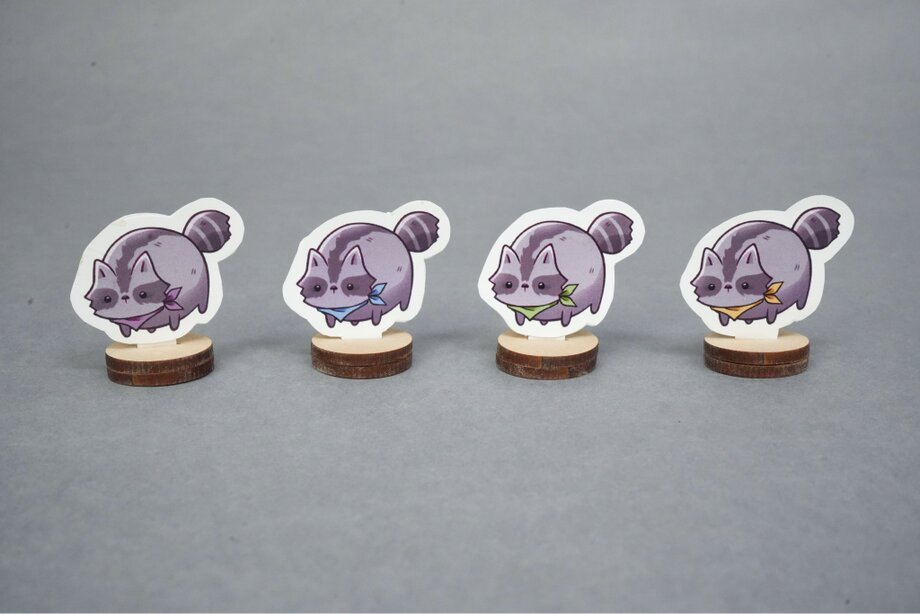
- 4 Raccoon and trash truck game pieces
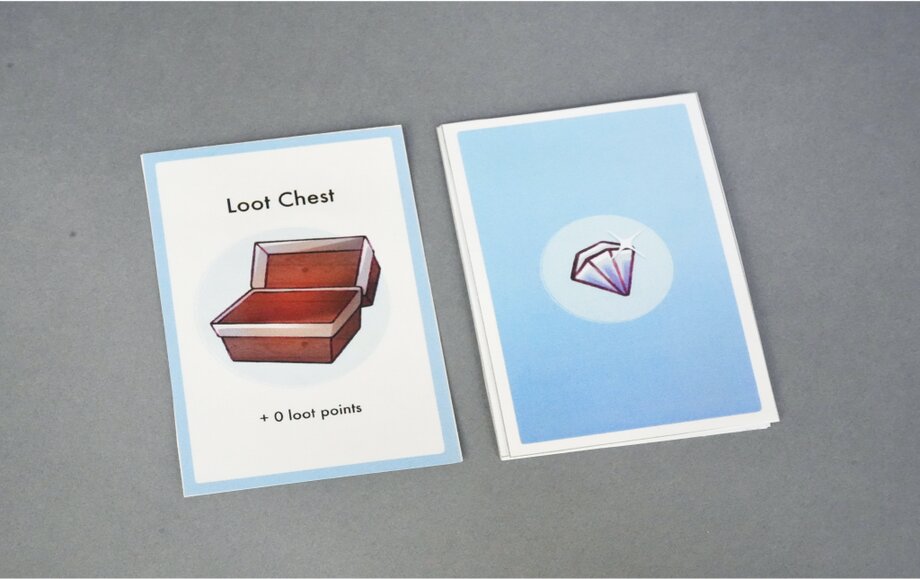
- 2 Loot card deck
- 5 Game board
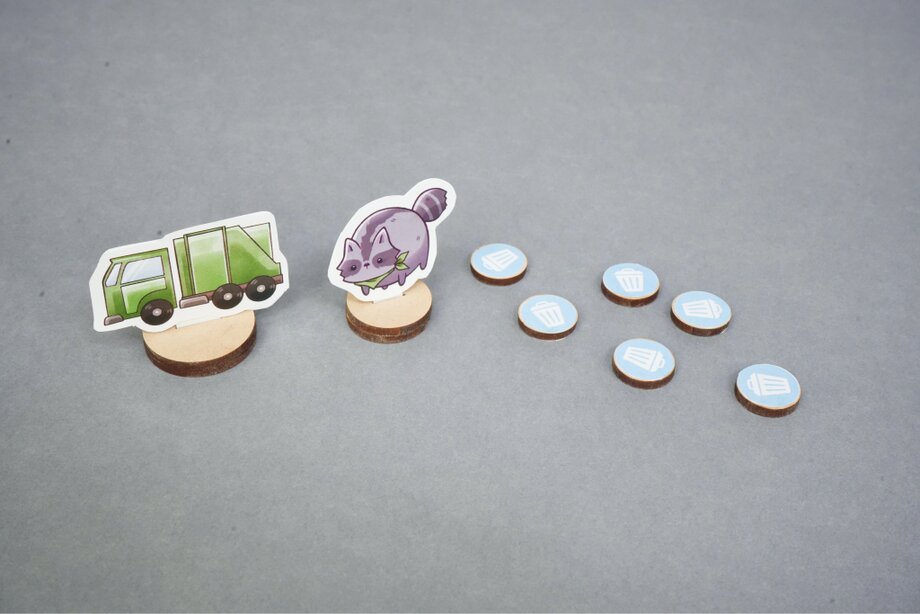
- 3 Seal point tokens
- 6 Game manual
Designed and produced over the course of one week as part of a game design course at UCLA.
Concept
The idea behind the game
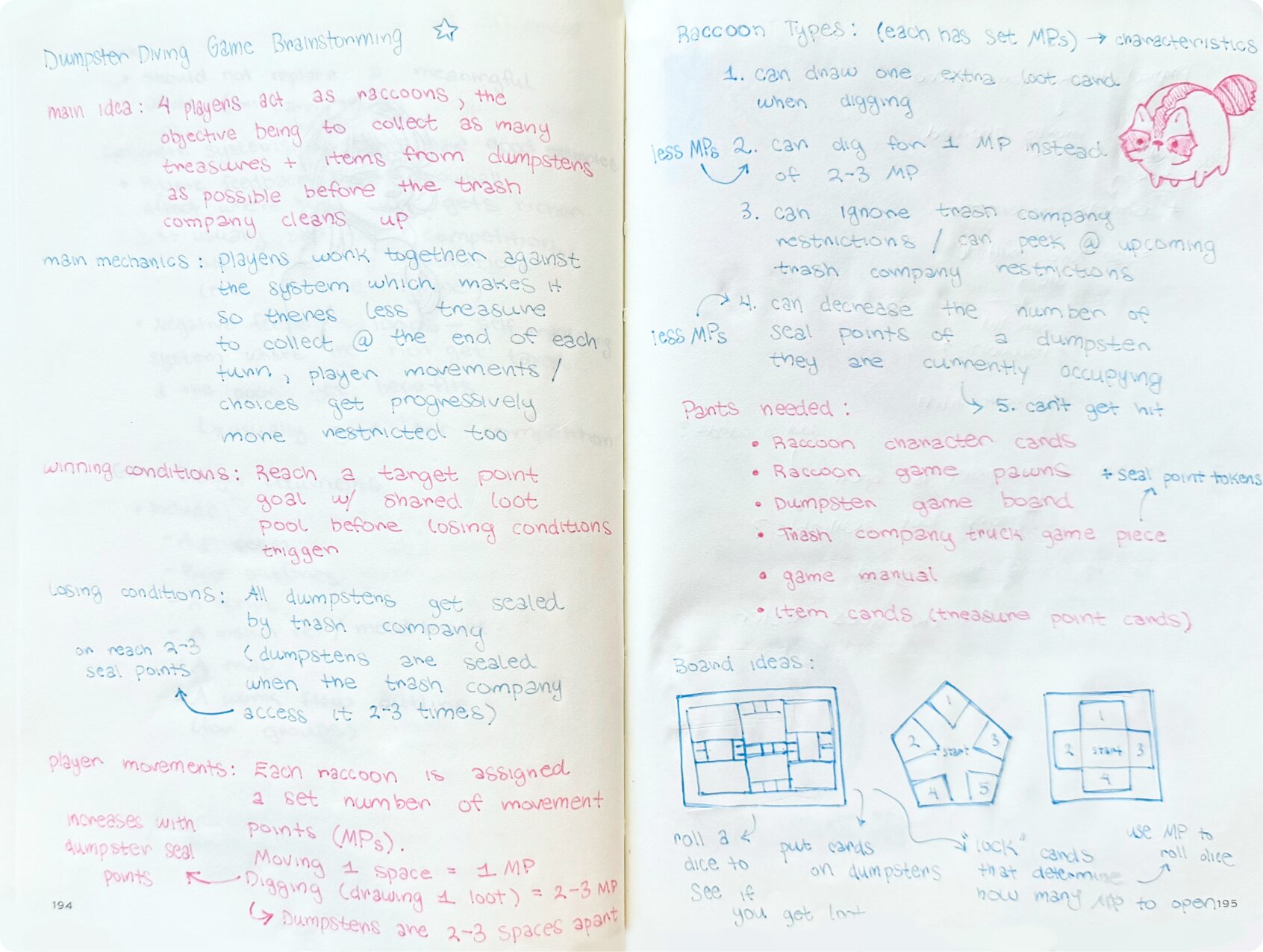
The game started with a clear premise, with a crew of raccoons cooperatively scavenging a neighborhood while a trash company worked against them. From there, brainstorming established the raccoon ability archetypes, a card-driven point system, and a shrinking map through sealed dumpsters. The three-stage escalation system doubled as the game's timer, with each stage introducing a new layer of pressure: fewer loot cards, then permanent dumpster sealing, then increased trash truck movement restricting player options in the final stretch. The raccoons are always racing to hit their point target before the trash company shuts the neighborhood down completely.
Design Direction
Building the visual language
For the art style, I went with something simple and cartoon-like to match the lighthearted concept, but kept it soft and slightly endearing rather than purely comedic. The raccoons needed to feel like gremlins you root for, scrappy and a little chaotic, which fit naturally with the hoarding and scavenging theme.
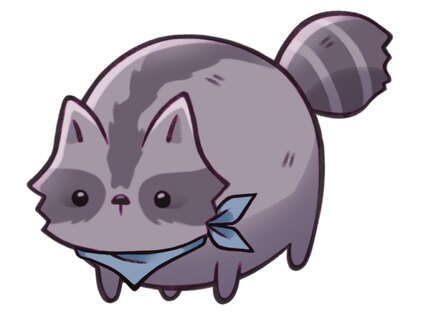
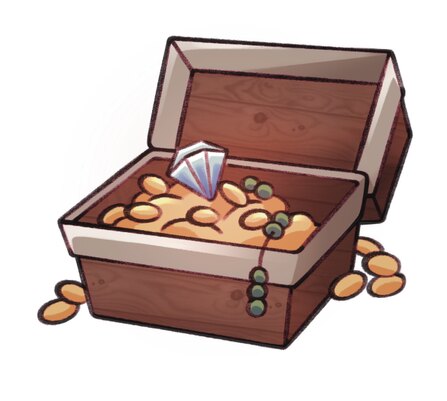

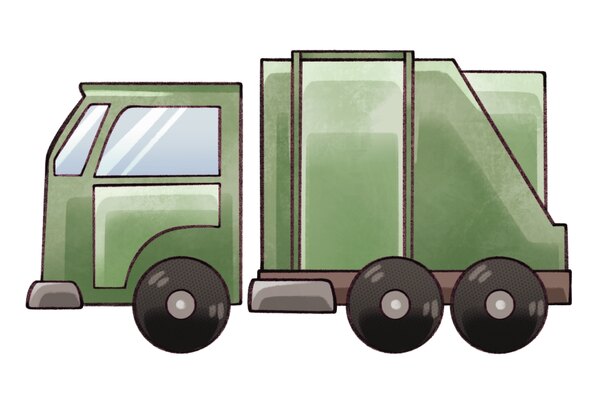
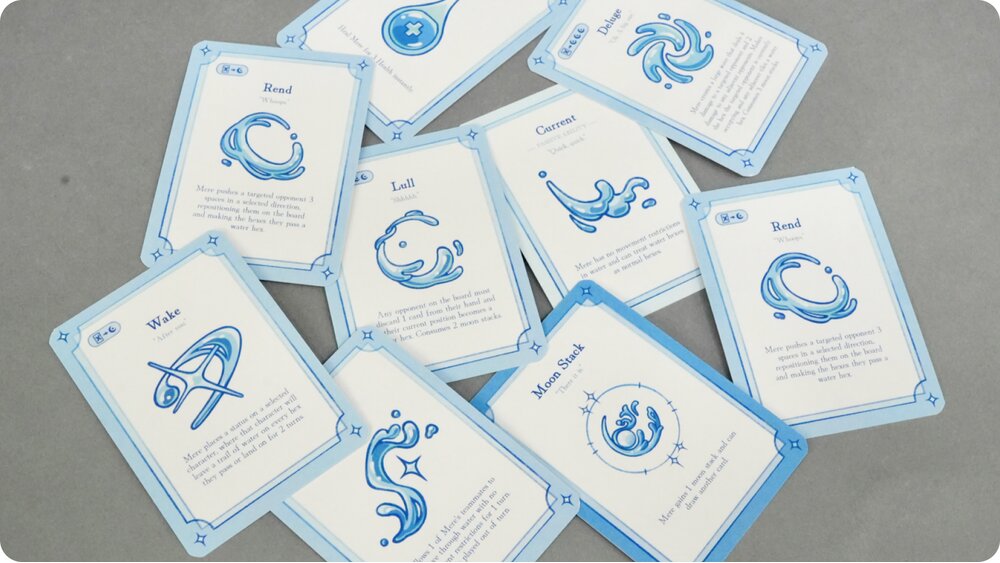
Game illustrations
Playtesting
What playtesting changed
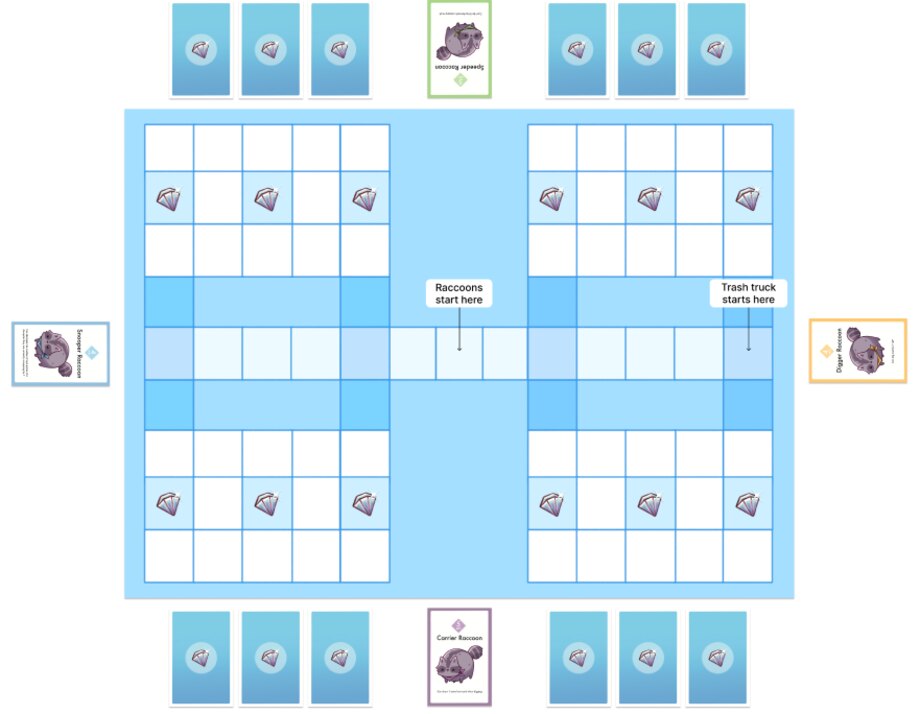
Playtesting revealed two key adjustments. The original dumpster layout was a single square where players could flip all loot cards without moving, which made the game too fast and removed meaningful decision-making. By expanding dumpsters into movement grids, the game forced players to be more deliberate about where they spent their movement points. The second change was introducing a physical trash truck game piece as a visual indicator of the game system working against the players, making the threat feel more tangible on the board.
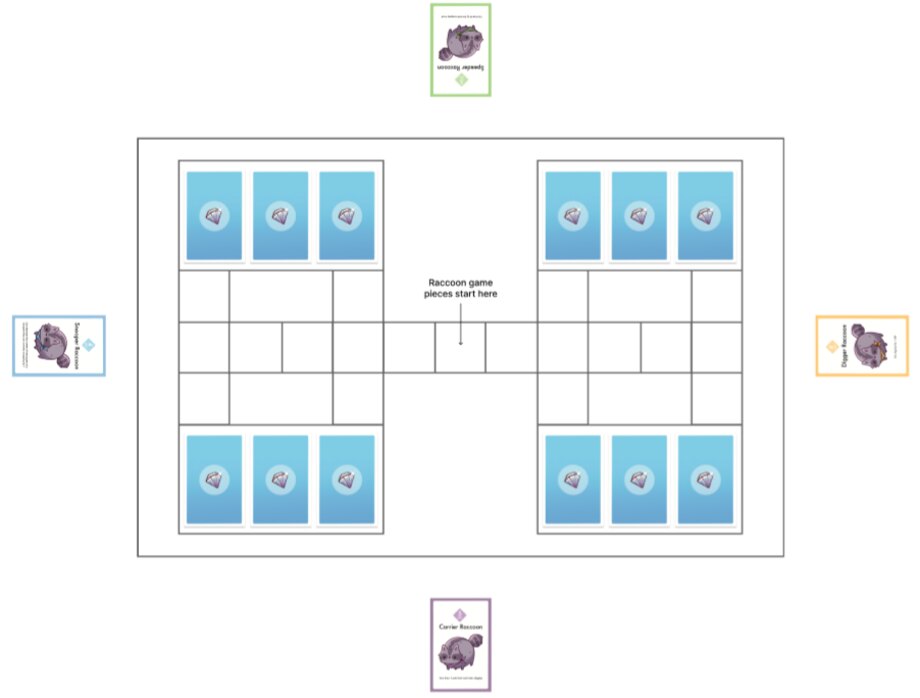
Finished Game
All the pieces, together
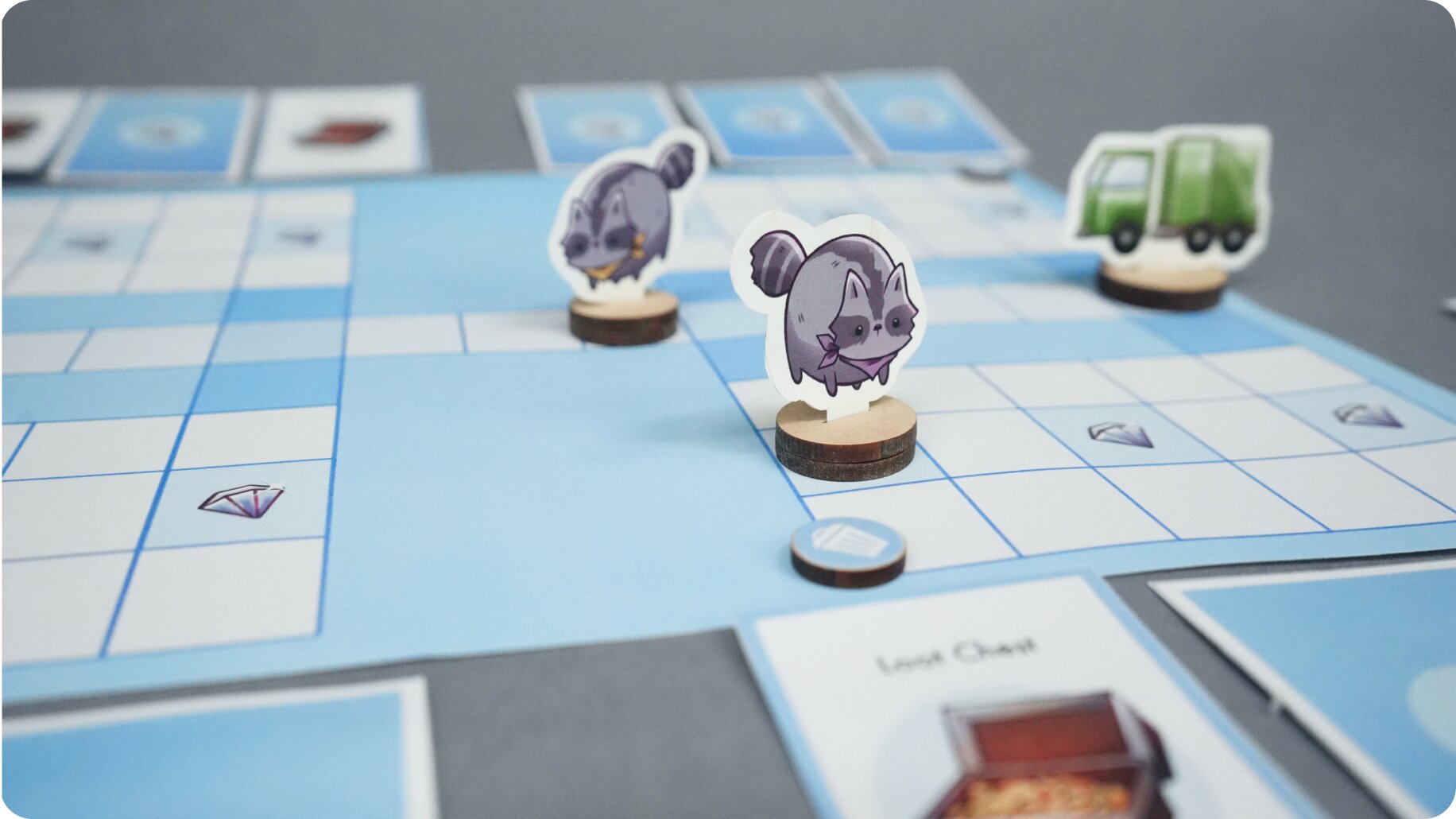
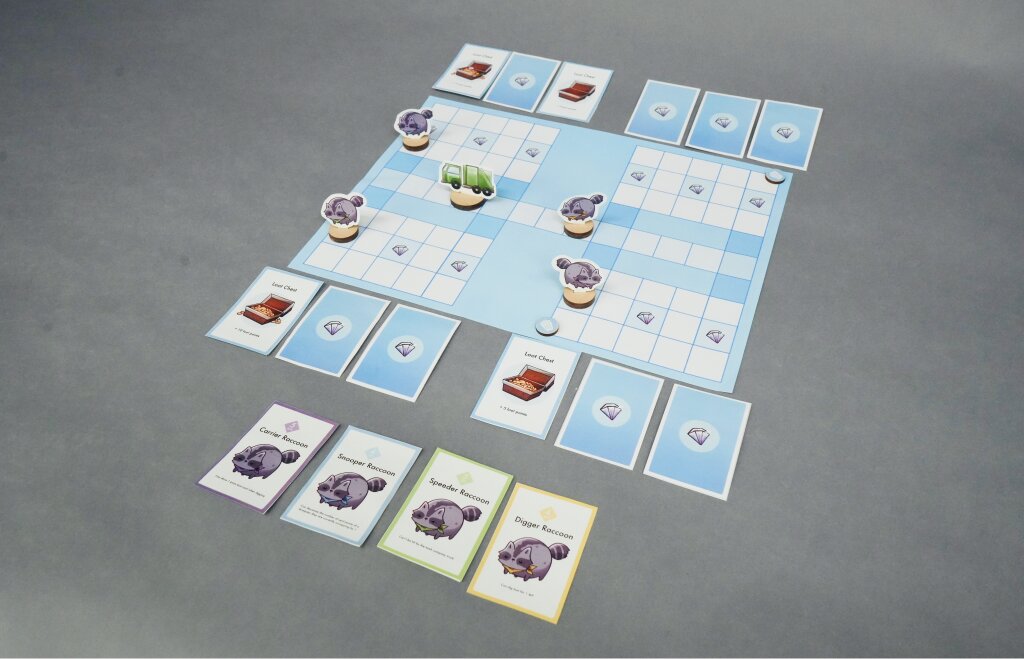
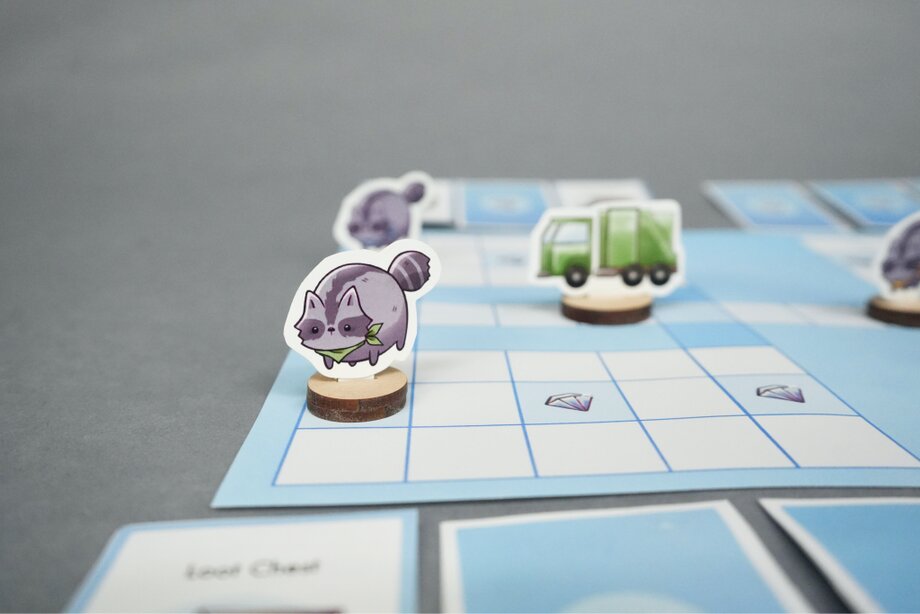
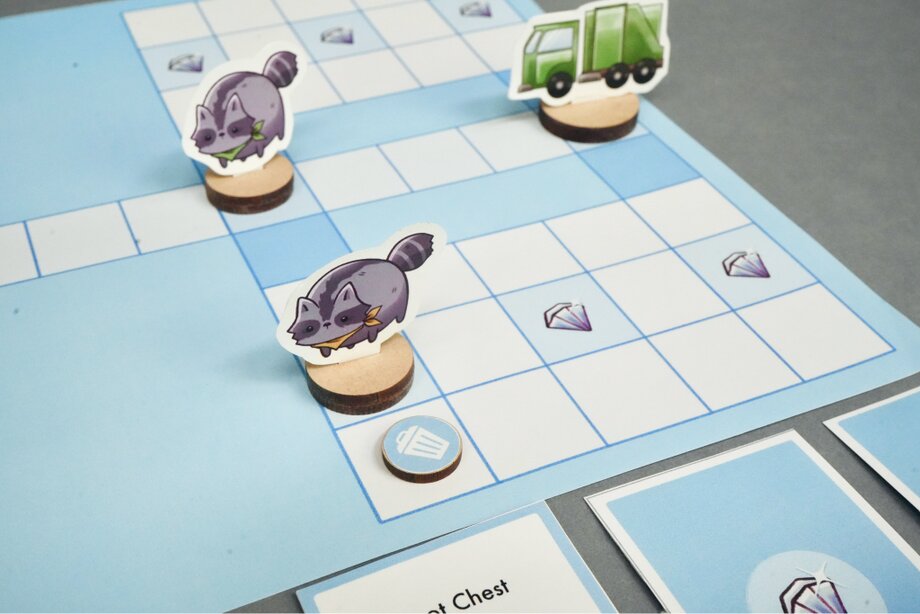
Photos of the completed game where the board, cards, tokens, and raccoon pieces, all come together are below.
Game Manual
Read the full rulebook
The full game manual is available to read below.
Reflection
Notes & Takeaways
This was my first time designing a tabletop game from the ground up, and it introduced me to a whole set of design considerations I hadn't worked with before.
Designing for fun,
not just function
Balancing characters, gauging play time, and building in feedback loops that actually influenced player decisions were all new concepts for me. Learning how these pieces worked together was really learning how to design something that felt fun, not just functional.
The importance
of playtesting
I also came away with a much better understanding of how important playtesting is. My game changed significantly, and improved a lot, after just one session with real players.